The Two-Thirds Horizon - Engineering Judgement and careers after 50
In recent months (and years) I have written about hitting those predictable institutional thresholds — the natural cycles where a senior technologist begins to look at the horizon and ask what comes next. I’ve joked openly about midlife crises, analyzed the predictable patterns of the seven-year itch, and questioned what it means to be a "veteran" in an industry that routinely worships youth.
Now, with my current role coming to an end on 31 August, I’m looking at a very specific set of numbers.
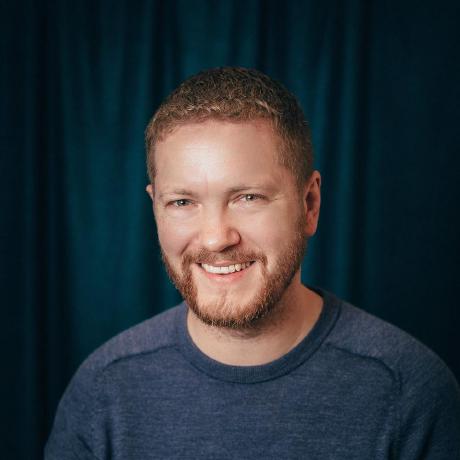
I am 51 years old, which puts me almost exactly two-thirds of the way through my expected working life.
Having started my working life at 21, straight out of university, I have somewhere between 6 and 16 years remaining until I can draw down my personal and UK state pensions and commit to a life of leisure for however many years remain on the clock.
Given that my father and both grandfathers all joined a certain well-known Norwegian Blue parrot in shuffling off this mortal coil to join the choir invisible at 71, I would rather not spend the next 16 years building up to what could be a mere 4-year retirement!
The recent loss of my father-in-law has also brought our family face-to-face with the reality of life's transitions, and has rebalanced the equation somewhat — the loss of a genuinely lovely man who welcomed me into his family on the one hand, but his legacy could also meaningfully alter our financial landscape, with the potential to become mortgage free in due course.
When you remove such a major economic pressure from a career equation, particularly at an age where your personal priorities are already shifting, the metrics change significantly. Success is no longer measured by corporate grandstanding, chasing fancy executive titles — which I have always actively despised — or building empires of headcount.
It's measured by pride in your work, quality of life, work-life balance, and cognitive alignment.
The management fork in the road
Somewhere around 20 years ago, I arrived at the fork in the road which faces most technologists as they become more skilled and experienced - become a manager, or remain an individual contributor?
I resisted the management path for a while, preferring to stay "hands on", but at some point the transition became either inevitable, irresistible, or impractical (or all of the above), and for the last 15+ years I have operated in leadership and executive roles — delivering global projects, managing large engineering footprints, driving product architecture, and scaling pyramidal team structures.
The standard corporate handbook says that once you reach this level, you stay there. You spend your days navigating shifting political priorities, continuous context-switching, and operational firefighting.
But over years of leading, I have learned how my own brain operates.
I am wired for deep focus, systemic pattern recognition, and structured domain mastery.
I am at my absolute best when I am given a complex problem, insulated from distraction, and allowed to systematically unpack it.
Conversely, a chaotic environment of unclear priorities and endless executive context-switching is a direct path to cognitive friction and executive overload.
That came home in rather a profound way recently when I had to take some time off work to both deal with stress and support my wife in her grief at the loss of her step-father. The stress part is something that many people would probably resist admitting, but as I took time out to reflect and to wrap up my recent series on the micro- and macro-level impacts of AI, I realised that the modern engineering organisation desperately needs something different than traditional pyramid managers.
As AI compresses raw execution and hollows out junior pipelines, teams are fracturing into smaller, diamond-shaped structures. Value has migrated almost entirely away from production speed and toward high-context engineering judgement.
As the unfolding era of AI reshapes software engineering, organisations don't just need people to manage the noise, they need deeply focused technical anchors who have the multi-decade experience that builds judgement, hard-won perspective from having been at the sharp end and survived, and the capability to look at a complex system and spot potential problems before they become tomorrow's incidents.
The next horizon
I am also about to make a significant transition in my employment status, parting company with Deltatre after 7½ years, so I am treating my two-thirds horizon as a deliberate, structured transition point in my career.
Given that I have the opportunity to pause for thought, and that I am in the lucky position that I can take a deliberate sabbatical, this feels like a genuine inflection point.
I don't yet know whether I will (or indeed can) pivot away from the management track and back into a meaningful, senior Individual Contributor footprint — possibly in a Staff or Principal Architect role — or possibly into independent consultancy, but I have always been more motivated by the challenge than the specific label applied to it.
Because I have become somewhat more cautious with my finances after previously feeling the consequences of some more youthful over-extension, my key financial baselines are covered for 6 to 12 months at least, and the mortgage may disappear during that time too, so I have an opportunity to filter for environment and quality of challenge over compensation alone.
I can look for opportunities with mature, stable organisations, research labs, or sustainable engineering teams that have interesting, novel, and/or deeply complex technical puzzles but lack the senior architectural oversight to solve and evolve them.
In that ideal world I would be explicitly looking for an environment that respects:
- Domain knowledge over Headcount: I want to own architectural outcomes, technology stack governance, and systemic resilience — not multiple line management or budget politics.
- Deep Focus over Firefighting: I thrive where priorities are transparent and where success is measured by strategic execution rather than frantic, daily, tactical pivoting.
- Genuine Work-Life Balance: I am looking for something to get my teeth into and to deliver strong engineering judgment during working hours, with the autonomy and stability to disconnect when the day is done.
I've spent 25 years building the knowledge, judgement, and structural intuition required to guide platforms and engineering organisations through massive technological shifts. Now, I think I want to deploy that intuition in its purest, most focused form.
If your engineering organisation has an architectural bottleneck, an AI integration strategy that needs sober systemic evaluation, or core platforms that require experienced technical stewardship without the overhead of management noise, let's skip the recruiters - drop me an email or a DM, and let’s have a chat and maybe grab a coffee (decaf for me, I'm afraid).
Failing that, if anyone has the winning numbers for next weekend's National Lottery or just wants to pay me handsomely to randomly pontificate on matters technical, I am open to exciting alternatives!